
2026-10-10 · Robert "Rob" Sanchez
Troubleshooting No Cool Air from Your AC During Sacramento Heat Spikes
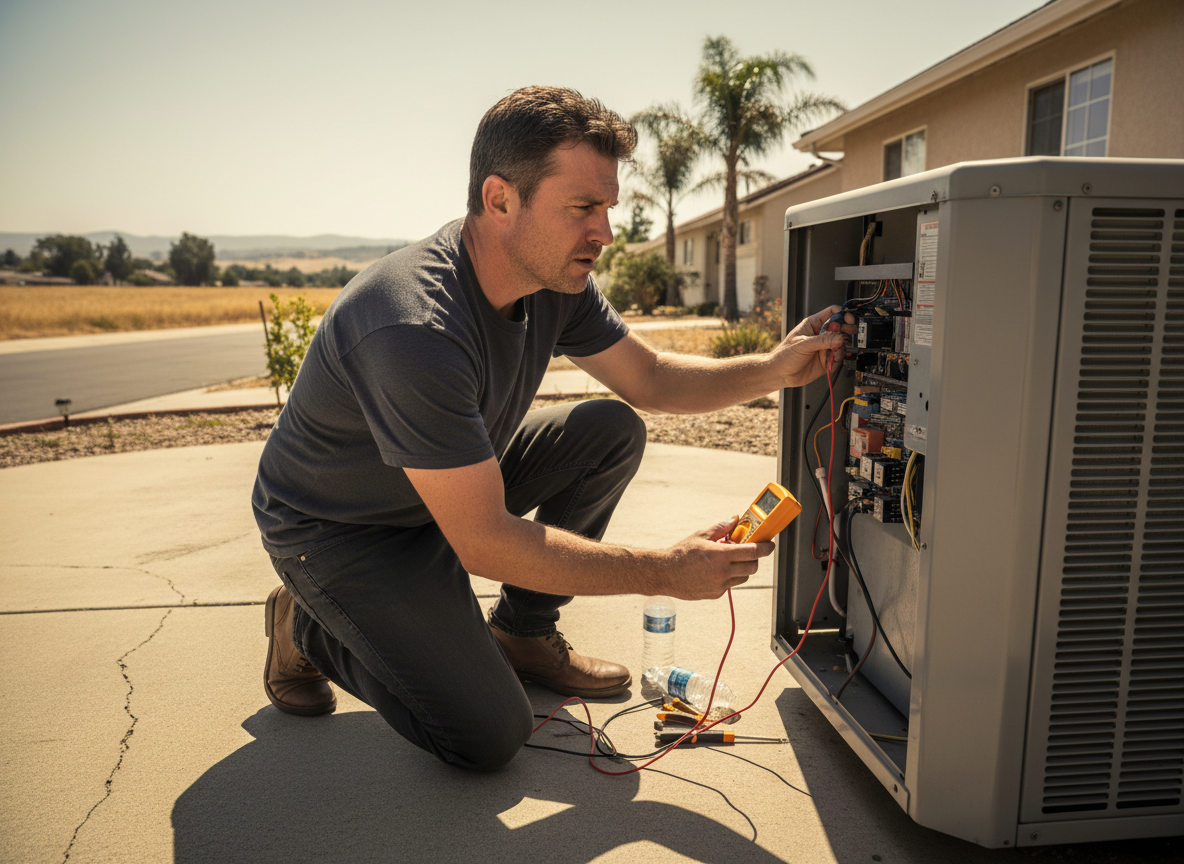
When your AC isn't blowing cool air during a Sacramento heat spike, the most common culprits range from simple, homeowner-fixable issues like a dirty air filter or a tripped circuit breaker to more complex problems such as refrigerant leaks or a failing compressor. Addressing the problem quickly is crucial, as sustained high temperatures in areas like Florin and Parkway can make an uncooled home unbearable and even dangerous. Many issues can be identified with a few checks, potentially saving you a service call, but some require the expertise of a professional HVAC technician to prevent further damage and restore comfort.
Check Your Thermostat Settings and Power Supply
Before diving into more complex diagnostics, always start with the basics. Ensure your thermostat is set to 'Cool' and the temperature is significantly lower than the current indoor temperature. Sometimes, the fan setting might be on 'On' instead of 'Auto,' which means the fan will run continuously but won't necessarily cycle the compressor to produce cool air. If your thermostat is programmable, check its schedule to ensure it hasn't defaulted to an 'Away' or 'Energy Saving' mode during a time you expect cooling. Also, verify that the outdoor unit (condenser) and indoor unit (air handler) are receiving power. A tripped circuit breaker is a common issue, especially in older homes across Sacramento 95828. Locate your electrical panel and look for any breakers that are in the 'Off' or middle position. Flip them completely off, then firmly back to the 'On' position. If the breaker trips again immediately, do not reset it repeatedly, as this indicates a more serious electrical problem requiring professional attention.
Inspect and Replace Your Air Filter
A clogged air filter is one of the most frequent causes of poor AC performance, and it's a problem we see constantly in homes throughout South Sacramento and Elder Creek. A dirty filter restricts airflow, forcing your AC system to work harder, which can lead to freezing of the evaporator coil and reduced cooling capacity. In Sacramento's climate, with seasonal allergens and dust, filters can become caked much faster than you might expect. We recommend checking your filter monthly and replacing it every 1–3 months, or more frequently if you have pets or allergies. A clean filter ensures proper airflow, which is vital for efficient operation and preventing your system from overheating. For more detailed guidance on this essential task, refer to our article on [/blog/how-to-replace-your-hvac-filter-for-sacramento-air-quality-days].
Examine the Outdoor Unit (Condenser)
The outdoor unit, or condenser, is where your AC releases heat from your home. If this unit is obstructed or malfunctioning, your system won't cool effectively. First, ensure there's clear space around the unit, free from leaves, grass clippings, and other debris that can block airflow. We often see units in Lemon Hill and Fruitridge overgrown with shrubs, which severely hampers their efficiency. Use a garden hose to gently rinse off any dirt or debris from the condenser coils. Be careful not to bend the delicate fins. Next, listen for the condenser fan. If it's not spinning, or if you hear unusual noises like grinding or buzzing, it could indicate a motor issue or a problem with the capacitor. A non-spinning fan means the heat can't be dissipated, leading to poor cooling. If the fan isn't running, turn off your AC at the thermostat and the circuit breaker to prevent further damage and call for professional AC repair.
Check for Frozen Evaporator Coils
If your AC is running but blowing warm air, or if you notice water pooling around the indoor unit, you might have frozen evaporator coils. This happens when airflow is restricted (often due to a dirty filter), or when your system is low on refrigerant. When the coils freeze, they can't absorb heat from your home's air, rendering your AC ineffective. To check, turn off your AC system and allow the coils to thaw, which can take several hours. While thawing, you might notice increased dripping from the condensate drain. Once thawed, check your air filter and replace it if dirty. If the coils refreeze quickly, or if your system continues to blow warm air after thawing, it's a strong indicator of a refrigerant leak or another underlying issue requiring professional diagnosis. Addressing a refrigerant leak promptly is crucial, as it impacts efficiency and can damage the compressor.
Consider Refrigerant Levels and Leaks
Refrigerant is the chemical compound that absorbs heat from your home's air and releases it outside. Your AC system is a sealed system, meaning refrigerant should not be consumed or need regular recharging. If your system is low on refrigerant, it means there's a leak. Signs of low refrigerant include: the AC blowing warm air, hissing or bubbling noises coming from the unit, or ice forming on the copper lines. A refrigerant leak not only reduces cooling capacity but can also lead to significant damage to your compressor, an expensive component to replace. Attempting to add refrigerant yourself without addressing the leak is a temporary fix and can be harmful to the environment and your system. If you suspect a refrigerant leak, it's essential to schedule a professional inspection and repair. Our team offers specialized [/services/refrigerant-leak-detection-and-repair] services to accurately locate and fix these issues.